

How to Present Your Retreat Online So It Gets Booked
For hosts: target audience, title, images, daily schedule, honest pricing, FAQ and a simple booking path – how to turn interest into bookings. Includes a checklist.
Topic
Tips for Hosts
Read time
7
minutes
Date
14.10.26
You put a lot of heart into your retreat or course: the program, the venue, the food, the atmosphere. But before anyone books, a single web page usually decides whether your offer is even considered. People compare, scroll quickly and leave as soon as something is unclear.
The good news: with a well-thought-out presentation, you make it easy for them to say yes – whether you offer yoga, meditation, sound journeys, fasting weeks or silent retreats.
1. Do you know who your offer is for?
Before you write a single word, answer one question: who do you want to reach? “Everyone who wants to relax” is too broad. A fasting week for working professionals who are fasting for the first time appeals to very different people than a sound retreat for experienced practitioners who want to deepen their own practice.
Once you know your target audience, every other decision becomes easier: which images you show, which questions you answer in advance and which tone you strike. Write down your target audience in one sentence and check every section of your description against it.
2. A title that makes it instantly clear what it's about
The title is often the only thing someone reads in an overview. It should convey three things: what it is, who it's for and where it takes place. Compare:
- Vague: “Back to Yourself – Days Full of Light”
- Clear: “Yoga & Meditation for Beginners – 5 Days in the Algarve, Portugal”
- Clear: “Fasting Week for Working Professionals in the Black Forest”
Poetic titles are fine – as a subtitle or in the text. People need orientation first, then the mood.
3. Images that convey the feeling
People book a feeling, and images convey it faster than any text. Real photos are more credible than perfect stock or AI-generated images. These subjects work well in a gallery:
- The venue and its surroundings – landscape, garden, view
- The room where the sessions take place
- The bedrooms, exactly as they are
- The food
- A session in action – yoga, meditation or sound
- You as the facilitator
Pay attention to daylight, a calm visual style and make sure the images also look good on a phone. One strong first image matters more than twenty mediocre ones. And ask everyone who can be recognized whether you may publish the photos.
Please note that ChakraTribe uses portrait images in a size of 500 × 700 pixels. Also keep in mind that large images cause long loading times, which can hurt your event. You can crop your images and reduce the file size here: Adobe Express Image Editor. After uploading to ChakraTribe, images are automatically converted to a web-friendly format. However, the image size is not adjusted automatically.
4. A description with a clear structure
Long blocks of text are rarely read in full. This structure has proven effective:
- Introduction: Describe in 1–2 sentences what your event is about.
Detailed description
Write the way you would talk to an interested person: warm, concrete and without jargon you don't explain.
- Opening: Who is the offer for and what will participants take away?
- What to expect: Content, methods and focus areas
- Program: The flow of your offer by hours or days
- Training: Which qualifications and certificates you hold
- Experience: How many years of experience you bring
- Food: Type of cuisine and whether special requests are possible
- Venue and accommodation: Location, rooms and atmosphere
- Getting there: How do people get there and is there a transfer?
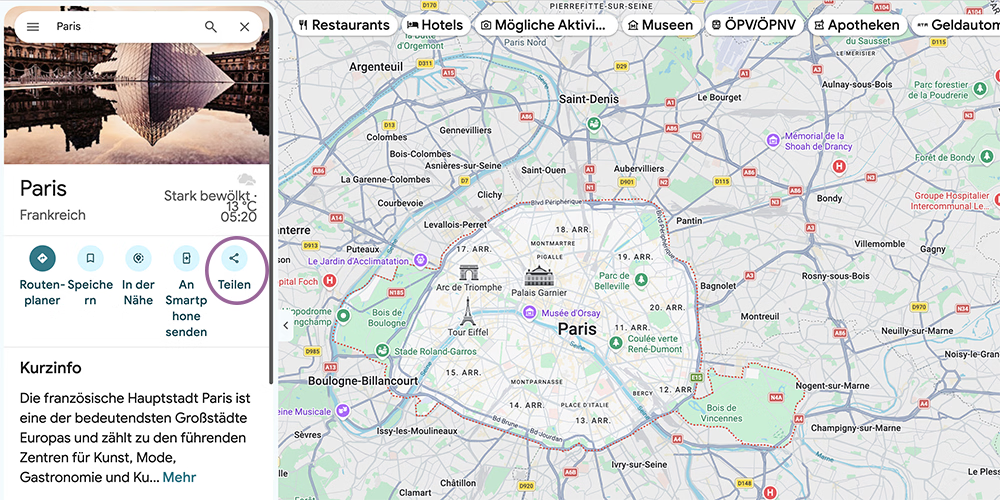
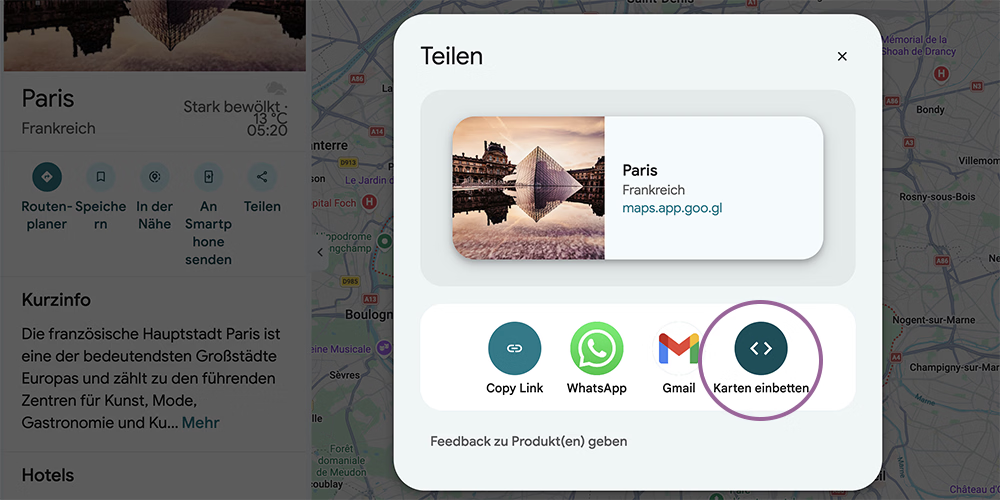
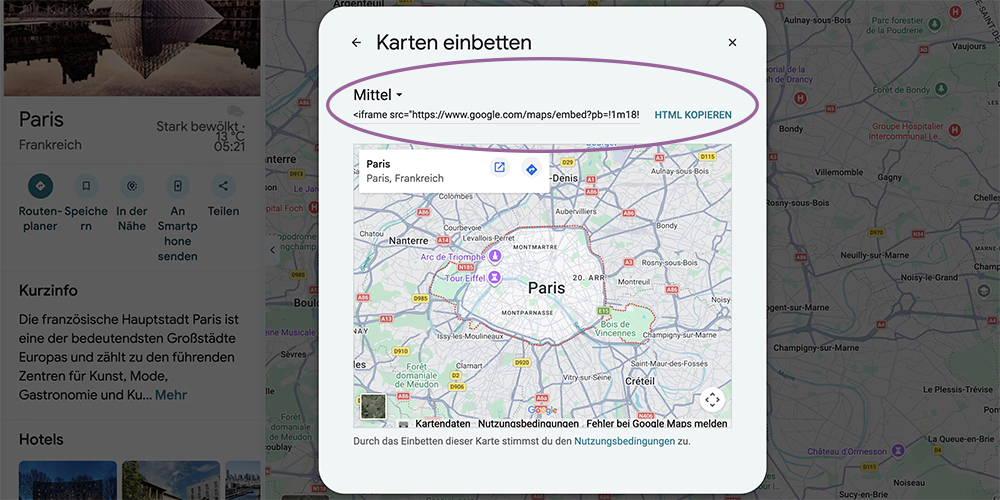
At ChakraTribe, we recommend embedding a Google Maps map. Here's how:
- Open Google Maps and enter your address.
- Click Share and select the Embed a map tab in the window.
- Copy the HTML code and paste it into the retreat form.
Step-by-step images
5. A daily schedule removes uncertainty
Especially people attending a retreat for the first time wonder: What will I actually be doing all day? Will I have time for myself? A sample daily schedule answers this in seconds, for example:
- 7:00 am Meditation and gentle yoga
- 8:30 am Breakfast
- 10:00 am Workshop or practice session
- 12:30 pm Lunch, followed by free time
- 4:30 pm Yin yoga or sound journey
- 6:30 pm Dinner
- 8:00 pm Evening circle or silence
Also mention what is optional. Many people find it easier to book when they know they don't have to join every session.
6. Key facts belong at the top
People who compare look for the hard facts first. This information should be visible at a glance, not hidden in the text:
- Date and duration
- Location and country
- Price
- Language
- Level – for beginners, advanced or all levels
- Maximum group size
- Category, for example yoga, meditation or fasting
7. Honest pricing builds trust
Unclear pricing is one of the most common reasons why people drop off. State exactly what is included and what isn't. For example:
- Included: Accommodation in a double room, vegetarian full board, all yoga and meditation sessions
- Not included: Travel, airport transfer, massages and excursions
- Single room supplement: State the amount clearly
If you offer different room categories or early-bird prices, show them clearly. And link your cancellation policy where it's easy to see – it signals professionalism and eases concerns before booking.
8. Show who you are
Participants spend days with you. They want to know who they are entrusting themselves to. A good “About me” section answers three questions:
- Who are you and what connects you to this practice?
- What training and how much experience do you have?
- How do you lead – gently, challengingly or playfully?
A natural portrait photo and perhaps a short video introducing yourself often make the decisive difference.
9. Real voices from past participants
What others say about your offer is more credible than anything you write yourself. Ask for brief feedback after every retreat or course. Specific questions help:
- What did you get the most out of?
- What surprised you?
- Who would you recommend this offer to?
Get permission to publish. If you like, we can display publicly available reviews from your Google Business Profile (Google Maps), Trustpilot or ProvenExpert on ChakraTribe. We generally recommend the Google Business Profile because it is visible in search results.
If you're just starting out, that's no problem: be honest that it's your first offer of this kind and collect feedback from the very beginning.
10. A simple path to booking
The fewer steps between interest and booking, the better. Add your booking page directly to the form.
11. Keep your offer up to date
Outdated dates, fully booked sessions without a note or old prices look unprofessional. Set a regular rhythm for reviewing your offers. If a date is almost fully booked, say so – it's honest and helpful information.
Checklist: Is your offer ready?
- Target audience defined in one sentence
- Title states what it is, who it's for and where
- Strong first image and real photos of the venue, room, bedrooms and food
- Description with a clear structure and short paragraphs
- Sample daily schedule
- Key facts at a glance
- Price with inclusions, extra costs and cancellation policy
- “About me” section with a portrait photo
- Participant testimonials – or an honest note that you're just starting out
- Clearly labeled booking button
- Dates and prices up to date
Frequently asked questions
What does ChakraTribe cost for hosts?
Hosts pay a monthly subscription based on the price of their event. There is no commission on bookings – the full amount of every booking stays with you. You'll find the details on our For Partners page.
How do bookings work through ChakraTribe?
People find your offer on ChakraTribe and go directly to your own booking page via a link. Booking, payment and communication take place directly between you and your participants.
Which offers are a good fit for ChakraTribe?
Retreats, events and courses in Yoga, Meditation & Mindfulness, Sound Healing, Detox & Fasting, Wellness & Health and Time Out & Stillness – on site or as an online course.
Do I need reviews before I can present my offer?
No. Especially when you're just starting out, an honest description, good images and clear key facts are what count. You can collect and add feedback over time.
I don't have professional photos yet. Is that a problem?
Not necessarily. Real, well-lit photos of the venue and of a session are often more credible than perfect stock or AI-generated images. What matters is that they honestly show what participants can expect.
Your offer on ChakraTribe
On ChakraTribe, you present your retreat or course with exactly these key facts – category, location, duration, language and price. People filter by them and book directly through your own booking page, commission-free.
Ready to show your offer? You'll find all the information for hosts on our For Partners page.
Also take a look at how other offers are presented on the platform: Browse retreats.
ChakraTribe News
In our news section, you’ll discover the latest retreats, events, and courses, and get to know the people behind them. You’ll also find inspiration for yoga, meditation, mindfulness, and conscious travel—so your next getaway begins the moment you start reading.
New retreats and courses delivered straight to your inbox
Get the latest offers delivered to your inbox every two weeks.